As I was getting lost in AdWeek.com I came across an article titled, "Closing the Tech Divide", with my growing love for digital agencies I decided I'd read the full article. It was pretty insightful. To sum it up- it was saying that digital agencies are really hot right now, but, the traditional agencies are just as capable of creating these great digital creation (Insert "Why Can't We Be Friends- War here). For example, good ole Crispin Porter + Bogusky won the Cyber Agency of the Year Award at Cannes this year. CP + B is an agency that has always been on top of interactive campaigns. They now have about 400 interactive employees. And they are considered a very traditional agency.
CEO, Bob Lord from Razorfish (AWESOME digital shop-- check out their work.. if you haven't already) said in this article, "I don't believe I'm in the business of creating brand perception," he said. "I'm in the business to create brand reality. Hopefully that feeds back into the brand perception, but I'm not in the business to create that. There are a lot of other companies to do that." Profound. This is what I feel digital does... whether it comes from a digital agency or traditional agency. It connects with the consumer is a different way. It is no longer a person sitting in front of a TV or radio. The brand is becoming real.
All advertising agencies intrigue me. Which is why it is my dream to work in one that I truly believe in. I don't think it matters if you are labeled traditional or digital or anything else- everyone can be capable of doing digital, and it is vital they do. As long as the agency, client, and consumers are ready to jump on and take the ride.
Saturday, July 31, 2010

Friday, July 30, 2010
Update
For those who loved the little 16 second commercials from Target as much as I did. Keep an eye out on TV- there are a few back-to-school inspired ones on right now. But, they aren't posted to its YouTube page yet.
Thursday, July 29, 2010
Thursday Wisdom
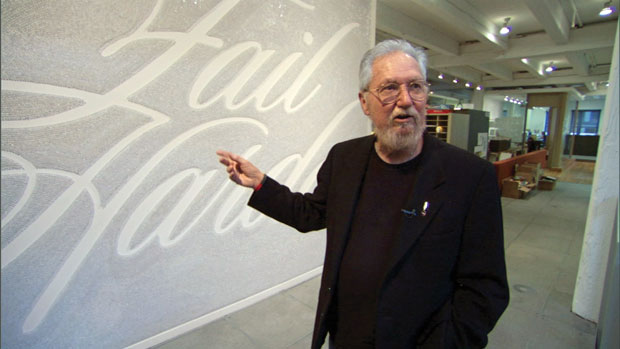
In honor of W+K's epic "Fail Harder wall (seen above with David Kennedy as he explains in Art & Copy), I give this piece of Thursday wisdom.
"Ever tried. Ever failed. No matter. Try Again. Fail again. Fail better." -Samuel Beckett
Wednesday, July 28, 2010
Wednesday Wisdom #2
Before we started this fabulous blog- Anna would share some of her favorite Cube Inspiration with me. Now, I get to read it everyday! This is one of my favorites she sent me back on Wednesday, June 23rd, and it has stuck with me.
"What you are in love with, what seizes your imagination, will affect everything. It will decide what gets you out of bed in the mornings, what you do with your evenings, how you spend your weekends, what you read, who you know, what breaks your heart, and what amazes you. Fall in love... stay in love, and it will decide everything." - Pedro Arrupe
This stands true for everything. Remember it. It is the reason I want to do this. I also thought it went along with Anna's post from Luke Sullivan about being in a job you love.
"What you are in love with, what seizes your imagination, will affect everything. It will decide what gets you out of bed in the mornings, what you do with your evenings, how you spend your weekends, what you read, who you know, what breaks your heart, and what amazes you. Fall in love... stay in love, and it will decide everything." - Pedro Arrupe
This stands true for everything. Remember it. It is the reason I want to do this. I also thought it went along with Anna's post from Luke Sullivan about being in a job you love.
Wednesday Morning Wisdom
For any other bleeding hearts out there:
"If you're going to be passionate about something, be passionate about learning. If you're going to fight something, fight for those in need. If you're going to question something, question authority. If you're going to lose something, lose your inhibitions. If you're going to gain something, gain respect and confidence. And if you're going to hate something, hate the false idea that your are not capable of your dreams." -Daniel Golston
Tuesday, July 27, 2010
Tuesday Morning Cube Inspiration
I probably should have pointed out long ago, the reason these are called "Cube Inspiration" is the quotes are hanging in my cube at work...ostensibly for my own inspiration. For today's installment, I turn to Curly Girl Design and a magnet hanging here beside me.
"The world is full of people who will go their whole lives and not actually Live one day. She did not intend on being one of them."
So go, live on this Tuesday. Just try not to die of heat stroke.
Not so fast, the grass may not be greener...
Luke Sullivan, whose book "Hey Whipple, Squeeze This!" I was forced to read in college, added an interesting essay to his blog today on agency-envy and the whiners that love to partake in it. As I had long suspected, hot-shops like CP+B and W+K also have their fair share of unsexy crap to wade through. So, moral of the story? Be careful what you wish for, and if your job really sucks, then leave...just don't expect a sexy agency on your resume to fix all the problems.
Monday, July 26, 2010
Monday Morning Cube Inspiration
Another juicy tidbit from our friends at McCannSF and their always brilliant "Stuff We Try to Remember"
"People are not waiting to consume. It's our job to find what's true about our product or find what's true about a group of people and start a relationship."
Happy Monday!
Friday, July 23, 2010
A Good Read
My bookshelf is full of ad books, favorite magazines, and Michael Phelps' book (inscribed with a note from my mom saying she bought it before she knew he was a pot head). And if you ever looked for ad books- they are mostly about copywriting. Now, I consider myself an account person and you can't fully teach yourself about account through books. You have to learn it and have the natural instincts. Therefore, my ad books are mostly creative based except one. The Art of Client Service by Robert Solomon.
My copy of the book is full of tiny little corner folds with stuff I found particularly profound. It is a pretty short book with 58 little chapters with titles like, "Know When to Look it Up; Know When to Make it Up", "Respect What it Takes to Do Great Creative", "Be Prepared to Throw Away the Script", "Judgment Overrides Any Rule", and "Remember to Say 'Thank You'". Full of his own experiences. It is very simple stuff, information you should already know, and may not realize you know it. Solomon makes it easy for you, writes it down and bound it into a book. So you don't forget. If you didn't know it already- now you do.
One of my favorite chapter is Chapter 13, "Don't Fall in Love with Good Work". It starts off with Solomon trying to convince an idea is best for the client, however his boss, the head of the company didn't like it. This is how Solomon responded: "'It is risky,' I conceded, 'but not because it's wrong, or because it's off strategy. It's risky because the client has never seen anything like this from us before, and its not what she's expecting. We'd be crazy to kill it without at least showing it to her. It's just too good.'" And the dialogue continues a bit more. But, what I like about is the message. Being able to do something because it is RIGHT not because it is what the client wants to see. Something I truly stand for. (If you want to know who won.. you are going to have to read the book, OR ask me...)
I strongly recommend this book. Amazon.com has it for pretty cheap, go to your favorite bookstore, or look at his website that I linked earlier. I bet you'd learn something.
My copy of the book is full of tiny little corner folds with stuff I found particularly profound. It is a pretty short book with 58 little chapters with titles like, "Know When to Look it Up; Know When to Make it Up", "Respect What it Takes to Do Great Creative", "Be Prepared to Throw Away the Script", "Judgment Overrides Any Rule", and "Remember to Say 'Thank You'". Full of his own experiences. It is very simple stuff, information you should already know, and may not realize you know it. Solomon makes it easy for you, writes it down and bound it into a book. So you don't forget. If you didn't know it already- now you do.
One of my favorite chapter is Chapter 13, "Don't Fall in Love with Good Work". It starts off with Solomon trying to convince an idea is best for the client, however his boss, the head of the company didn't like it. This is how Solomon responded: "'It is risky,' I conceded, 'but not because it's wrong, or because it's off strategy. It's risky because the client has never seen anything like this from us before, and its not what she's expecting. We'd be crazy to kill it without at least showing it to her. It's just too good.'" And the dialogue continues a bit more. But, what I like about is the message. Being able to do something because it is RIGHT not because it is what the client wants to see. Something I truly stand for. (If you want to know who won.. you are going to have to read the book, OR ask me...)
I strongly recommend this book. Amazon.com has it for pretty cheap, go to your favorite bookstore, or look at his website that I linked earlier. I bet you'd learn something.
Friday Morning Inspiration
Some of us (like this girl) work summer hours and therefore are only looking at another 1 hour and 42 minutes until the weekend. For the rest of you, here's some cube inspiration to get you through 'til 5.
"Great advertising almost always starts with something true."
Take it in, swish it around a little, hope it tastes good.
Wednesday, July 21, 2010
HumpDay Afternoon Wisdom
For today's wise tidbit, I'll reference one of my new-old ad-world heroes: Phil Dusenberry of BBDO. This particular piece of wisdom made its way into my senior thesis...yes, it is that profound. It broaches a topic that I'll explore in greater depth later - if at the end of the day we're all selling the same crap, what is it that we do here to create value for our audience? Enjoy!
"There is a problem of parity. In a world where 8 beers cannot all be the driest, where 11 golf balls cannot each travel the farthest, where 5 automobiles cannot all deliver the smoothest ride, and worse, even if they do, the distinction isn't important enough to make a difference in the consumer's life, how do I differentiate myself from the crowd?" -Phil Dusenberry
Tuesday, July 20, 2010
My favorite place
Target is one of my favorite places ever. I am there multiple times a week. Since most have Starbucks inside, if there was a place I could take a nap- I don't think I would ever leave. I was pleasantly surprised (not like it would ever disappoint me) with their new campaign "Life's a moving target". It includes a bunch of 15-16 second commercials that will feature a certain product. Not necessarily the Target stores.
Here is my favorite= Faster.
Simple Truth.
If you want more (you know you do)- here is Target's YouTube page. There are a bunch from this campaign and also 1 minute videos from the "College Memory Theater". It is college season and Target loves that.
Here is my favorite= Faster.
Simple Truth.
If you want more (you know you do)- here is Target's YouTube page. There are a bunch from this campaign and also 1 minute videos from the "College Memory Theater". It is college season and Target loves that.
Monday, July 19, 2010
So maybe I'm not the only bleeding heart in advertising...
For anyone that has met me for more than 2.5 minutes, you know that I'm a bit of a bleeding heart. I'll rant and rave about my belief in doing right by other people, and the core belief that we are, in fact, each others' keepers. My bleeding heartedness extends into advertising - I wrote my senior thesis on Corporate Social Responsibility and Transparency. The crux of this 130 page document was that in a world of instantaneous and global information, you're an idiot in business if you don't embrace CSR as a core value of your organization - your questionable business antics won't stay secret and your brand will suffer. Turns out, someone at Adweek seems to agree with me.
In the wake of Alex Bogusky's epic departure from MDC & his namesake agency, speculation, mostly consisting of petty gossip, has swirled as to the reasons why. Warren Berger disagrees. Maybe it's the industry, not Bogusky that's having a midlife crisis.
Maybe the Midlife Crisis Isn't Bogusky's?
What ad star's exit says about the state of the industry
It's been interesting to watch some of the recent coverage of Alex Bogusky's resignation from MDC Partners. Stories and blog posts have tended to focus on gossip (who got mad at whom?), money (how big a payout did Alex get?) and psychodrama (is the dude having a midlife crisis?).
None of that interests me much (well OK, the money part is always interesting). What I've been thinking about is, what does this incident say about the current state of the ad industry? And having considered that question, it's got me thinking that maybe the midlife crisis here isn't Bogusky's.
Without knowing the inside dirt on whatever internal politics may have been involved, it seems clear that two things happened here. Part one: Bogusky in recent times became increasingly interested in things that did not directly relate to the day-to-day running of an ad agency -- including such not- insignificant matters as ethics in advertising, the role of business in addressing social challenges and the future health of the planet.
Now, it's easy to be cynical about this kind of an awakening, but it seems to me that a lot of people I'm encountering -- in the ad business, in the design world, all over the place -- are starting to grapple with these kinds of big social issues these days. So sure, maybe everyone's just having a midlife crisis. Or maybe more people are recognizing that the crisis is, you know, all around us, and that it might not be such a crazy idea for people to start paying attention to what's going on in the world with an eye toward doing something constructive.
Anyway, on to part two of what seems to have happened: MDC tried to give Bogusky a more hands-off role that would allow him freedom to ponder those bigger issues. But as Bogusky proceeded to do that, raising questions and inciting discussion on a couple of hot topics (including the subject of ads aimed at children), it seems to have caused friction with clients and led to a parting of the ways between Bogusky and the ad business.
The second part of the story suggests to me that some client companies are perhaps still a bit thin- skinned when it comes to having any kind of candid discussion about serious issues. Which in turn suggests that these companies are living in the past -- in a pre-social networking era when they could actually still control the public debate.
You don't have to be Clay Shirky to know those days are over: Everybody talks about everything now, and companies are much better off being engaged in the conversation and maybe even leading it. But they can only do so if they're willing to talk about issues (including potentially controversial ones) honestly and openly.
There are lots of tough questions companies must confront in dealing with a consumer who's more engaged, more informed and more concerned with social issues than ever before. Among those questions: What does the company stand for? What does it believe? How does it make its products and treat its employees? Is it being straight with us in its ads? All of these points are part of the larger conversation people are now having about brands.
One of the new roles for ad agencies may be to help clients figure out how to have these expanded, deeper conversations with the public and come out looking good. It's harder and more complicated than just doing one-way messaging in the form of clever 30-second commercials. Helping client companies transition into this new era of accountability and responsibility may require that the agency be willing to step up and ask a client some of those tough questions cited above -- and then help that client figure out how best to address these issues in a way that doesn't come off as empty spin.
This might involve making ads, sure, but it could also involve launching community initiatives, revising corporate policies, improving product design -- it could involve just about everything the company does, as well as what it says. Is all this non-advertising stuff any of the ad agency's business? It ought to be. In the newly transparent business environment, everything a company does ends up communicating some kind of message to the world. Which makes it all relevant to the relationship between a company and its communication partner.
To the extent agencies can succeed in taking on this larger role of helping clients broaden and deepen the conversation with the public, the agencies will of course be helping themselves, too. Because ad agencies, as we all know, are grappling with their own midlife crisis -- which began a few years ago, when they noticed that their favorite tool (the TV commercial) was suddenly showing signs of aging and diminished potency. On top of that, the business is losing some of its appeal to bright young people who, these days, are showing more interest in solving problems and creating progress than in just selling stuff.
One way for agencies to get beyond being just "ad guys" is to become mediators in this new conversation and this deepening relationship between a company and its public. It might even allow the ad agency to claim some of the moral high ground as it plays a greater role in guiding companies to do the right thing -- not just for themselves, but also for the world at large. Is that an overly ambitious and idealistic vision of the future of ad agencies? Maybe. But hey, when you're having a midlife crisis, you're allowed to dream big.
I have to do it..
I understand the Old Spice social media campaign is a thing of the past but, I have to give my views on this. I'm not going to explain what went on because, if you are any type of ad person- you have had to heard about it (just like the Subservient Chicken, right Keesh?). If not, Google it- or check out it Twitter @OldSpice.
First things first, Wieden+Kennedy is on fire. I have been in love with them since I saw Art & Copy. And, I have to say, the "Write the Future" campaign for The World Cup was simply amazing. Now, the Old Spice social media efforts. I read an article where one of the people working on this social media campaign for Old Spice basically said they did nothing that hasn't done before. It just brought the character to life. I pretty much agree, however, like the greatest of advertising, it took it one step further.
The thing with this Old Spice campaign was how instantaneous everything was. July 13th-14th, I kept my Twitter open waiting for the next video to be posted. This was all done in two days, you could post a question and know within the hour if the Old Spice man was going to reply back. It was on multiple social media outlets that all connect together which helped reach many people. Old Spice personified soap. Advertising agencies know what they are doing, well, most. And the best do what is best for the client. Good for Old Spice to take the chance and listen to the people at Wieden+Kennedy.
I have no reason to buy men's body wash. However, if and when I ever do, there is a good chance it will be Old Spice in hopes my man will turn into the handsome, charming, and insanely witty, Isaiah Mustafa.
First things first, Wieden+Kennedy is on fire. I have been in love with them since I saw Art & Copy. And, I have to say, the "Write the Future" campaign for The World Cup was simply amazing. Now, the Old Spice social media efforts. I read an article where one of the people working on this social media campaign for Old Spice basically said they did nothing that hasn't done before. It just brought the character to life. I pretty much agree, however, like the greatest of advertising, it took it one step further.
The thing with this Old Spice campaign was how instantaneous everything was. July 13th-14th, I kept my Twitter open waiting for the next video to be posted. This was all done in two days, you could post a question and know within the hour if the Old Spice man was going to reply back. It was on multiple social media outlets that all connect together which helped reach many people. Old Spice personified soap. Advertising agencies know what they are doing, well, most. And the best do what is best for the client. Good for Old Spice to take the chance and listen to the people at Wieden+Kennedy.
I have no reason to buy men's body wash. However, if and when I ever do, there is a good chance it will be Old Spice in hopes my man will turn into the handsome, charming, and insanely witty, Isaiah Mustafa.
Monday Morning Cube Inspiration
Today's inspiration comes from one of my favorite brands, Lululemon's manifesto:
"The world is changing at such a rapid rate that waiting to implement changes will leave you 2 steps behind. DO IT NOW. DO IT NOW. DO IT NOW."
Happy Monday!
Sunday, July 18, 2010
Pretty much explains us
This is a Leo Burnett quote that both Anna and I have come across on different occasions and brought it up to each other. I am sure I can speak for Anna by saying this pretty much explains us and is the reason we are doing what we do.
"I'm often asked how I got into this business. I didn't. It got into me." - Leo Burnett
"I'm often asked how I got into this business. I didn't. It got into me." - Leo Burnett
Newest Curiousity
I first heard about QR codes a few years ago when researching Ralph Lauren’s marketing. They started to use QR codes as an alternative way to shop and view the collections, primarily in Asia. I was intrigued, however I never really saw it again.
Until now. QR stands for “Quick Response” and it really is a quick way to engage. I am starting to see these little black and white boxes everywhere, especially in advertising. There was a spread in my latest issue of Glamour for a clothing company; it was an extreme close-up of lips and on the bottom corner, a QR code and instructions. When you scan the code, it will open your browser to a website where you could download a short film. Days later, at a trip to the Mall of America- I came across a space where a new store is being put in and there were four different QR codes on the store front. One was to open its Facebook page, another for its Twitter page, another was to inquire employment, and the last was an answer to a riddle (pictures below). With the rise of smart phones, QR codes are way more practical and a great way to target a certain market.


These funny little codes are a different way to engage with the consumer. The consumer is opting-in to interact with the brand. It gives a person more time with the advertisement. I flip through hundreds of print ads in a magazine but if I decide to scan that QR in the Miss Me ad; I am stepping away from the rest of the magazine and interacting. It isn’t replacing the traditional advertisements; it is just giving it a little something to continue the conversation. Unless you are Calvin Klein, then you are replacing some billboards with giant QR codes.

Saturday, July 17, 2010
One of my favorite things
McCannSF has a confusing site to navigate, but I L-O-V-E love their "stuff we try to remember" section. Here's one tidbit I found particularly profound this Saturday evening.
"Our strategy and insight need to be clear and logical. Our message does not. If we all feel perfectly comfortable about our rational and logical message, people will see the pitch coming a mile away, and run like hell."
"Our strategy and insight need to be clear and logical. Our message does not. If we all feel perfectly comfortable about our rational and logical message, people will see the pitch coming a mile away, and run like hell."
Thursday, July 15, 2010
Daily Wisdom
"Forget words like ‘hard sell’ and ‘soft sell.’ That will only confuse you. Just be sure your advertising is saying something with substance, something that will inform and serve the consumer, and be sure you’re saying it like it’s never been said before."
— Bill Bernbach
Hello Blogosphere!
PoisonGasBlog is now LIVE! Prepare yourselves for uncensored opinions on the world of advertising.
Subscribe to:
Posts (Atom)